Skip to content

The fortress story

Two centuries within the granite

From a strategic harbor defense to a National Historic Landmark, move through the fort's story chapter by chapter and explore the places where that history unfolded.

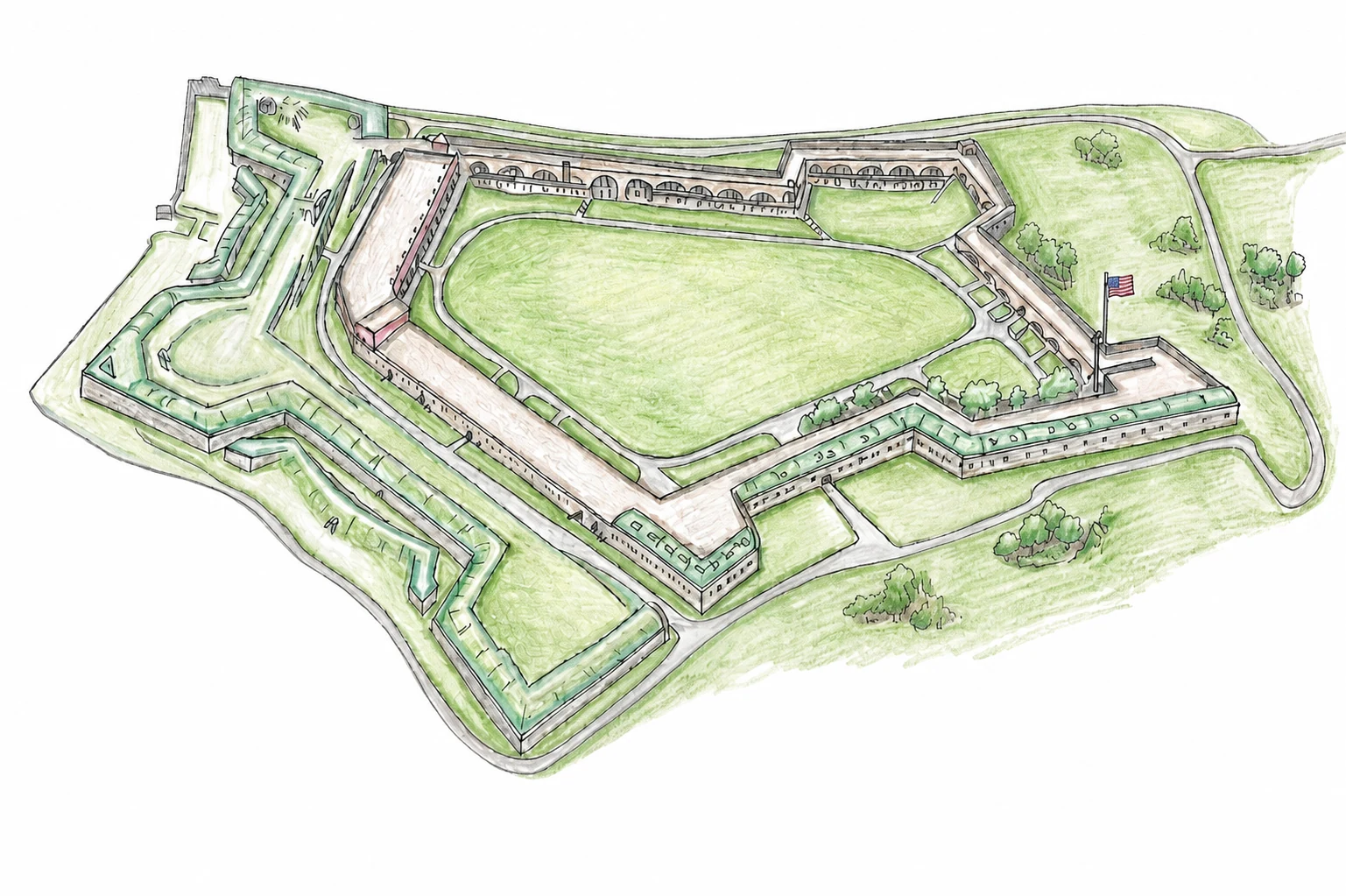
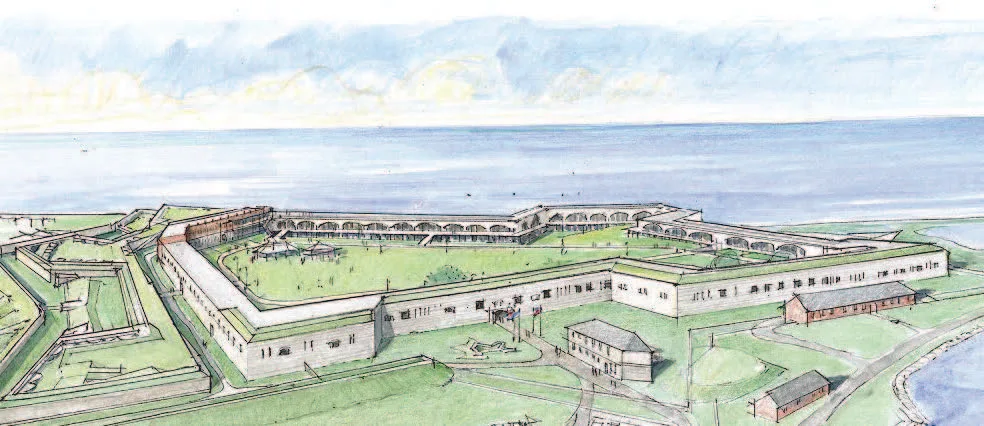
Historic illustration of Fort Adams and its coastal setting

1799 · Origins

A fort named for a president

The first Fort Adams was built here in 1799 and named for President John Adams. Newport Harbor was strategically vital: it was the only deep-water harbor between Boston and New York, making the entrance to the harbor and Narragansett Bay essential to defend.

1 / 10

The Fort Adams Trust

Restoring access to a national landmark

Founded in 1994, Fort Adams Trust is a 501(c)(3) nonprofit that partners with the State of Rhode Island to manage and operate the fort while generating support for its renovation and preservation.

Despite three decades of restoration, roughly 70% of the fort remains inaccessible to the public and in need of repair. The Trust's goal is to restore and open the whole fort, improve safety, and expand access to new areas for everyone to enjoy.

Restoration projects

Reopening the fort, one project at a time

2021–present

Southeast Demi-Bastion

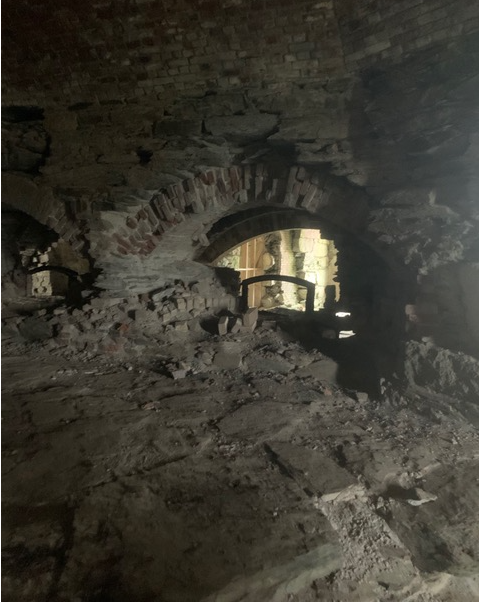
In 2021, the Trust rebuilt and repaired collapsed arches ($318,000). In 2022, crews removed roof ballast and unstable tar and prepared for new concrete ($66,650); patched collapsed holes with rebar ($66,000); poured a reinforced concrete slab ($168,000); and repaired the granite partition wall ($47,500).

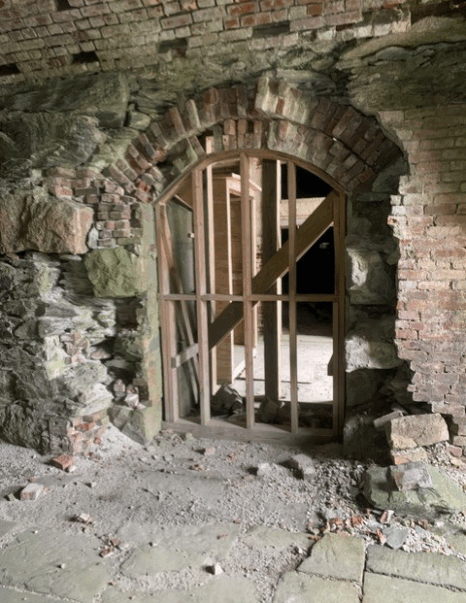
From 2023 to 2024, the project repaired the South and North Walls ($605,100); reinstalled gun pivot and traversing blocks ($18,750); installed a new terreplein roofing system ($750,250); repaired the bakery-window arch ($30,100); rebuilt the bakery's interior West brick wall ($69,300); rebuilt the gate-opening arch ($27,400); reset granite panels ($81,600) and steps ($103,500); improved terreplein drainage ($47,500); and installed custom steel railings ($73,150).

This work continues the Trust's effort to stabilize, preserve, and open more of the fort for public use.

Construction work underway at the Southeast Demi-Bastion
Masonry restoration underway at the Southeast Demi-Bastion
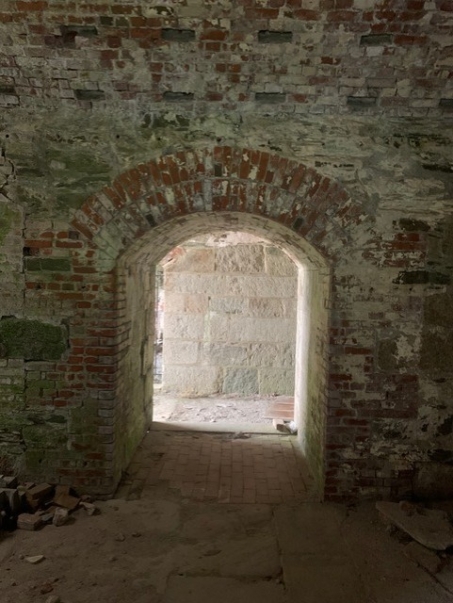
Completed brick arch restoration at the Southeast Demi-Bastion

Since reopening the fort in 1995, the Trust and its partners have restored historic fabric, improved safety, and made more of this national landmark accessible to the public.

Want to experience the history in person?

Walk the ramparts and descend into the tunnels with one of our guides.

Book a guided tour